

Blog

What to Expect from an Assessment at Together OT

A practical overview of the occupational therapy assessment process at Together OT, from the first conversation to your follow-up call.

Occupational Therapist Heather Harder

Written by

Heather Harder , OT Reg.

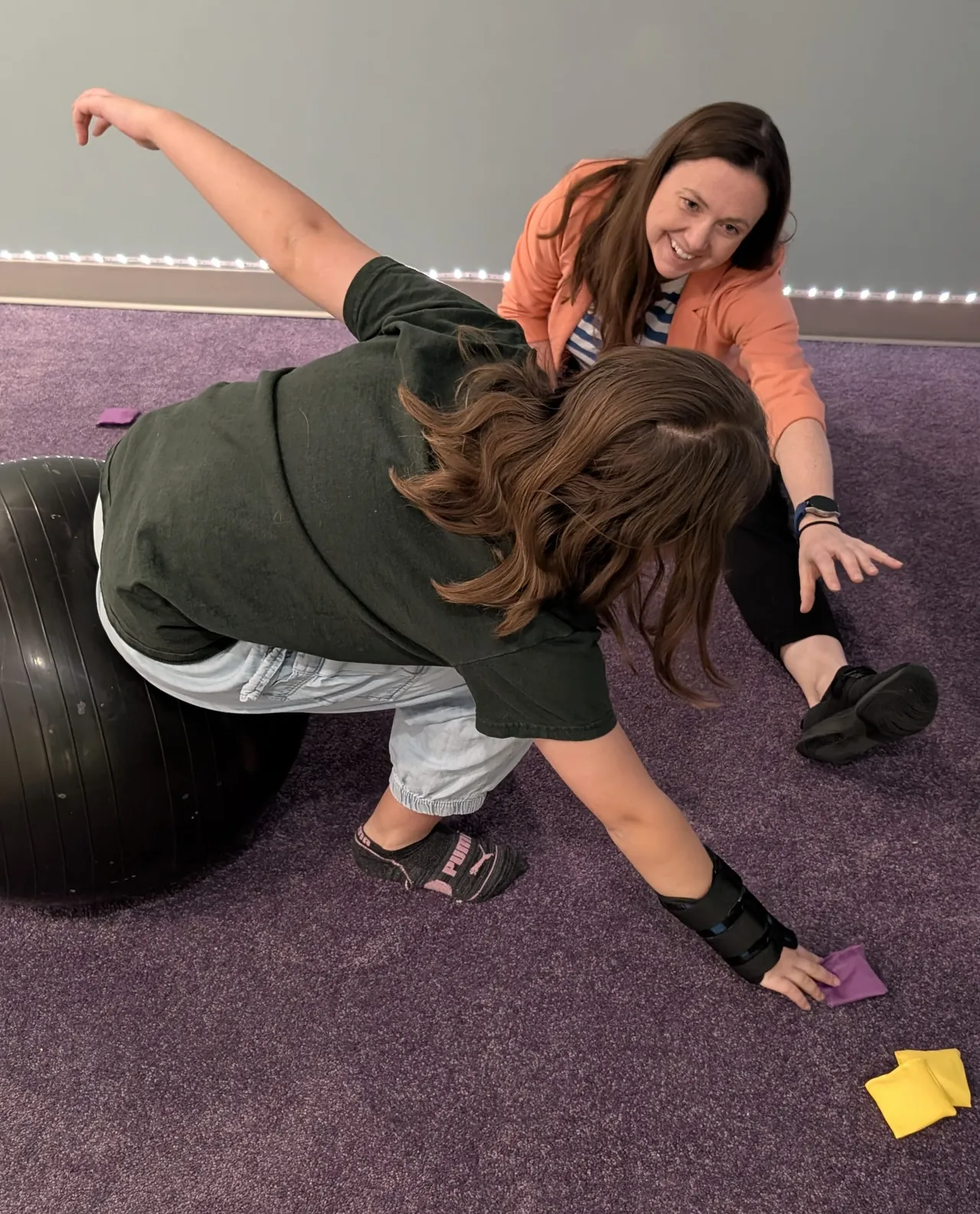
Heather supports a child through a movement activity during an occupational therapy assessment

Starting occupational therapy can feel like a big step, especially when you are not sure what an assessment involves. At Together OT, we try to make the process straightforward, collaborative, and useful for families.

Our assessments help us understand what is going well, where a child may be experiencing challenges, and what supports could make everyday activities easier. The goal is not simply to provide a list of scores or identify areas of difficulty. We want to give you information you can actually use.

What Does the Assessment Process Look Like?

We typically begin with two one-hour appointments.

The first appointment is a phone conversation with a caregiver. It gives us an opportunity to learn about your child from the people who know them best. We talk about what brought you to OT, what you are noticing at home or school, your child's strengths and interests, and the activities that may be more challenging.

The second appointment takes place in person with your child at The Burrow. This is where we can observe your child in action and use a combination of standardized assessments, clinical observation, and play-based activities. Depending on the focus of the assessment, we may look at fine motor skills, sensory processing, movement, visual-motor skills, postural support, or interoception.

Our aim is to make this appointment feel as comfortable and engaging as possible. An assessment does not have to mean sitting at a desk and completing worksheets for an hour. We can use movement, games, and activities that help us see how a child approaches different tasks and environments.
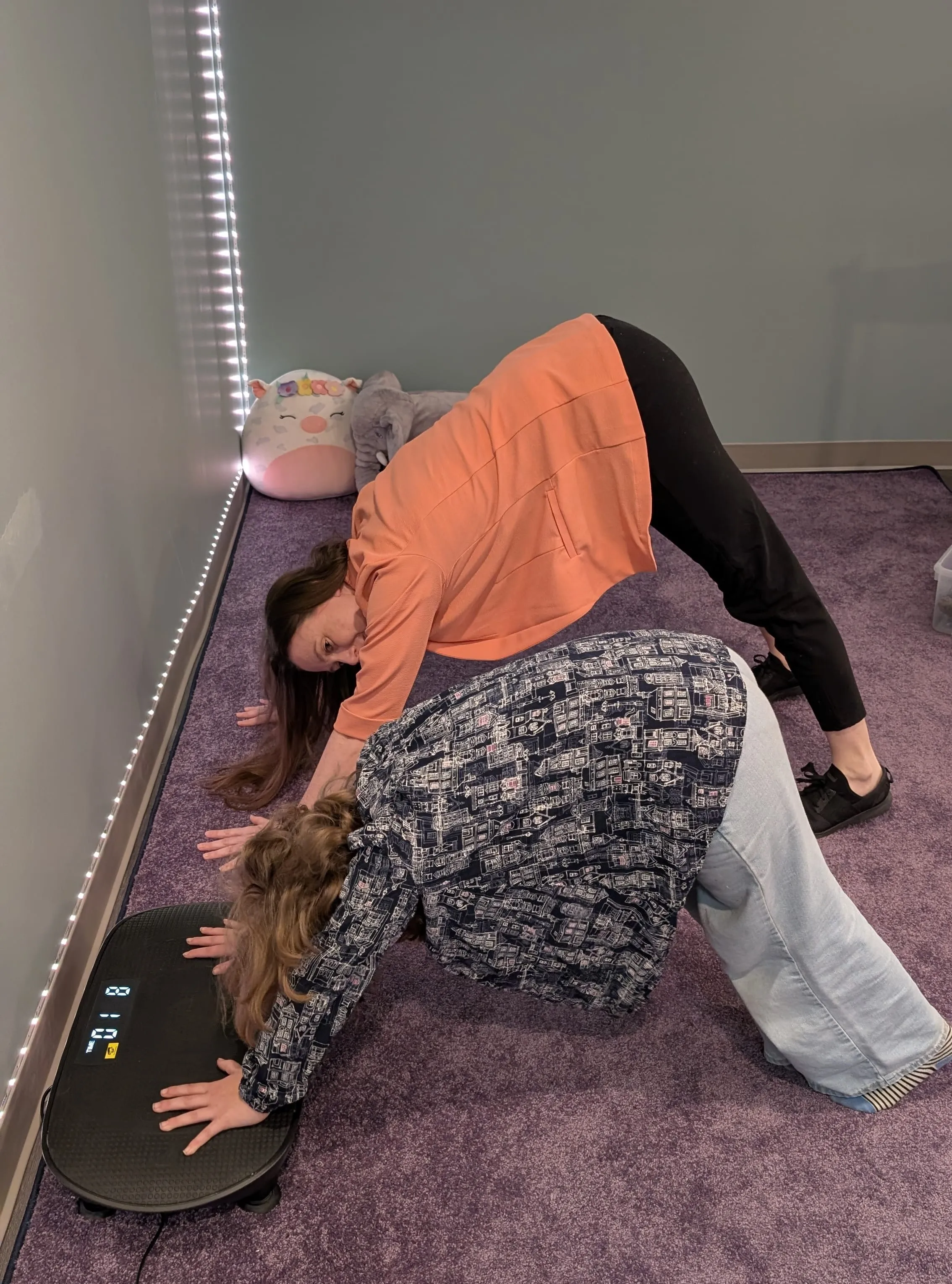
Heather and a child use movement equipment in the Burrow's calm, flexible space

Following the second appointment, we prepare a detailed report and typically send it to your family within two to three weeks.

The report belongs to you. You are welcome to share it with your child's school, other therapists, physicians, or anyone else involved in supporting your child.

What Might We Assess?

The focus of an assessment depends on what your family is hoping to understand. Some families come with a very specific question, while others are not quite sure what is contributing to a challenge. We can work together to determine which areas would be helpful to explore.

For fine motor skills, we may look at handwriting and visual-motor skills using portions of the McMaster Handwriting Protocol and the Beery VMI. We also use informal assessment to explore hand strength, coordination, visual-motor skills, and postural support.

For sensory processing, we use the Sensory Processing Measure as a standardized assessment. We also observe how a child interacts with different types of movement and equipment within the Burrow. How comfortable are they with different types of movement? What kinds of sensory input do they seek out or avoid? How do they respond to different environments and activities? These observations help us develop meaningful recommendations.

For interoception, we use Kelly Mahler's Interoception Assessment, which includes both a caregiver interview and an assessment with the child. This can help us better understand a child's awareness of internal body signals and how this may relate to their everyday experiences.

Assessments can also combine areas. For example, if you are looking for support with both fine motor skills and sensory processing, we can include both areas in the assessment process.

What Happens After the Assessment?

Once you receive your report, you will have some time to read through it and think about the information and recommendations.

We then have a 15-minute follow-up phone call. This is an opportunity to ask questions, talk through anything that was not clear, and discuss what the recommendations might look like in real life.

The recommendations in the report are intended to be a starting point. During the follow-up conversation, we can make them more specific to your home, your family's routines, and your child's everyday life.

Sometimes families leave the assessment with ideas they can start using right away. Other times, the assessment helps identify areas where ongoing OT support might be helpful. There is no one right next step. The goal is to help you understand your options and decide what makes sense for your family.

How Much Does an Assessment Cost?

A standard OT assessment is $395.

If the assessment includes more than one focus area, there is an additional $50 fee to account for the added assessment component and report-writing time. For example, including both fine motor skills and sensory processing costs $445 for the assessment.

Assessment cost includes all preparation time, report-writing time, and supplies. There are no hidden fees.

Who Completes Assessments at Together OT?

At Together OT, assessments are completed by Heather Harder, OT Reg.

Whether you are looking for answers about handwriting, sensory processing, movement, interoception, or something that is simply making everyday life harder, an assessment is an opportunity to pause, look at the whole picture, and figure out what might help next.

If you have questions about whether an OT assessment is right for your child, we would be happy to answer them at hello@togetherot.com.